

Introduction
In today’s digital world, password security strength has become one of the most important factors in keeping personal information, business accounts, and online identities safe. Every day, millions of accounts are targeted because of weak or reused passwords, making it clear that simple password choices are no longer enough.
Understanding how strong password creation works can significantly reduce the risk of unauthorized access. A well built password is not just about complexity, but also about how difficult it is for attackers to predict or crack it using modern tools.
In this guide, you will learn everything about password strength, how to check password strength effectively, and how tools such as a password strength meter help you evaluate your security level. You will also understand password entropy and why it plays a key role in measuring how secure your password really is.
What is Password Security Strength

Password security strength refers to how resistant a password is to being guessed, cracked, or broken by automated hacking tools. The stronger the password security strength, the harder it becomes for attackers to gain unauthorized access to your accounts.
In simple terms, it measures how safe your password is against modern cyber attacks such as brute force attacks and dictionary attacks. A weak password can often be cracked within seconds, while a strong password may take years or even longer depending on its complexity.
Several factors directly affect password security strength, including:
- Password length, where longer passwords are generally more secure
- Complexity, such as the use of uppercase and lowercase letters, numbers, and symbols
- Uniqueness, meaning the password is not reused across different accounts
- Predictability, avoiding common words, patterns, or personal information
Improving password security strength is essential for protecting sensitive data, especially as cyber threats continue to evolve and become more sophisticated.
What Makes a Strong Password
A strong password is one of the most effective defenses against unauthorized access, and it is a key factor in improving overall password security strength. It is designed in a way that makes it extremely difficult for attackers to guess or crack, even with advanced tools.
A truly strong password is not based on personal details or common words. Instead, it is built using randomness, variety, and sufficient length to increase complexity.
Here are the main characteristics of a strong password:
- It contains at least twelve to sixteen characters for better security
- It includes a mix of uppercase letters and lowercase letters
- It uses numbers and special symbols to increase complexity
- It avoids common words, phrases, or predictable patterns
- It does not include personal information such as names, dates, or locations
- It is unique and not reused on other websites or applications
Creating a strong password significantly improves password security strength and reduces the risk of being compromised. Even small improvements in complexity can make a big difference in how long it takes for a password to be cracked.
Understanding Password Strength
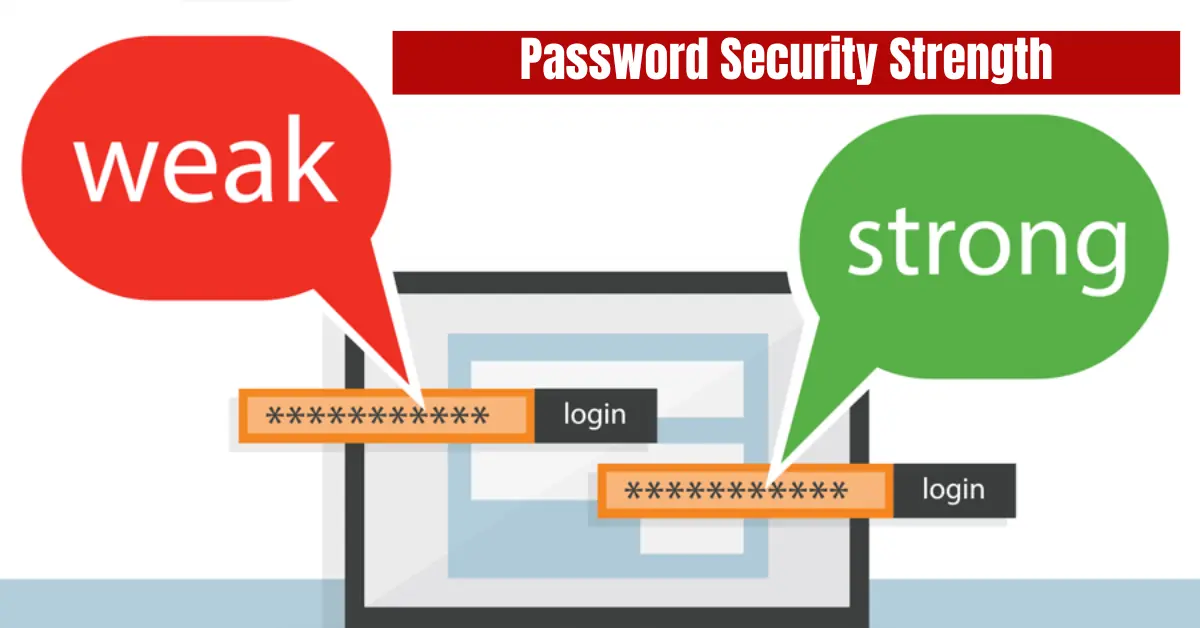
Password strength is a way to measure how secure a password is against different types of cyber attacks. It helps users understand whether their password is weak, moderate, or strong based on how difficult it would be for an attacker to guess or crack it.
A password is considered strong when it is long, random, and does not follow predictable patterns. On the other hand, weak passwords are usually short, repetitive, or based on common words that can be easily found in password lists used by hackers.
Password strength is often evaluated using automated systems that analyze multiple security factors at once. These systems check how complex the password is and estimate how long it would take to break using modern computing power.
How a Password Strength Meter Works
A password strength meter is a tool that helps users evaluate how secure their password is in real time. It is commonly used during sign up or password creation to give instant feedback on whether a password is weak, moderate, or strong.
The main purpose of a password strength meter is to guide users toward creating safer passwords by analyzing different security factors.
A password strength meter typically checks:
- Password length and whether it meets recommended standards
- Variety of characters such as uppercase, lowercase, numbers, and symbols
- Presence of common words or predictable patterns
- Repetition of characters or simple sequences like 123 or abc
- Overall randomness and complexity
Based on these factors, the tool assigns a strength score or rating. It may also suggest improvements, such as adding more characters or increasing complexity.
How to Check Password Strength Effectively
Knowing how to check password strength is an important step in improving your overall password security strength. It helps you understand whether your password is safe enough to protect your personal and professional accounts.
There are several ways to check password strength, and most of them are simple and user friendly. Many websites and applications already include built in tools that analyze your password as you create it.
To check password strength effectively, you can follow these steps:
- Use a trusted password strength meter to analyze your password
- Observe the strength rating such as weak, moderate, or strong
- Pay attention to feedback or suggestions provided by the tool
- Improve the password by increasing length or adding more complexity
- Recheck the updated password to confirm improvement
A good practice is to check password strength every time you create a new account or update an existing password. This ensures that your credentials remain secure against modern cyber threats.
What is Password Entropy
Password entropy is a technical way to measure how unpredictable a password is. In simple terms, it shows how difficult it would be for an attacker to guess your password through repeated attempts.
The higher the password entropy, the stronger the password security strength. This is because high entropy passwords contain more randomness, making them extremely hard to predict or crack using automated tools.
Password entropy depends on several key factors:
- Password length, where longer passwords create higher entropy
- Character variety, including letters, numbers, and special symbols
- Randomness of structure, avoiding patterns like repeated or sequential characters
- Unpredictability, meaning it cannot be easily guessed based on personal information
For example, a short password with common words has low entropy and is weak, while a long random combination of characters has high entropy and is considered very strong.
Best Practices to Improve Password Security Strength
Improving password security strength is not only about creating complex passwords but also about following consistent habits that keep your accounts protected over time. Small changes in how you create and manage passwords can greatly reduce the risk of security breaches.
Here are some of the most effective best practices to improve password strength:
- Use long passwords that are at least twelve to sixteen characters
- Combine uppercase letters, lowercase letters, numbers, and symbols
- Avoid using common words, predictable patterns, or keyboard sequences
- Do not include personal information such as your name, birthday, or phone number
- Never reuse the same password across multiple websites or apps
- Use a trusted password manager to securely store and generate passwords
- Enable two factor authentication wherever it is available
Following these practices consistently helps increase password security strength and makes it significantly harder for attackers to compromise your accounts. Strong habits combined with strong passwords create the best defense against modern cyber threats.
EEAT Based Security Insight
When it comes to password security strength, following the EEAT principles is important to ensure that the information and practices you rely on are both reliable and effective in real world use.
Experience plays a key role because real users often face threats like phishing attempts, data leaks, and password reuse issues. Learning from these real situations helps in understanding what actually weakens password security strength.
Expertise is reflected in using well established cybersecurity practices such as strong password creation rules, password entropy concepts, and secure authentication methods. These are widely recommended by security professionals to reduce risk.
Authoritativeness comes from following guidance provided by trusted cybersecurity organizations and platforms that continuously study evolving attack methods and update best practices accordingly.
Trustworthiness is achieved by applying safe and tested methods, such as using password managers, enabling two factor authentication, and regularly checking password strength using reliable tools instead of unverified sources.
Conclusion
Password security strength is one of the most important factors in protecting your digital life in today’s connected world. As cyber threats continue to grow, relying on weak or reused passwords is no longer safe or acceptable.
By understanding how strong password creation works, learning how to check password strength, and using tools like a password strength meter, you can significantly reduce the risk of unauthorized access. In addition, knowing concepts like password entropy helps you evaluate how unpredictable and secure your password really is.
When combined with best practices such as using long and unique passwords, enabling two factor authentication, and avoiding predictable patterns, you can greatly improve your overall online security. Strong password habits are a simple but powerful step toward long term digital safety.
